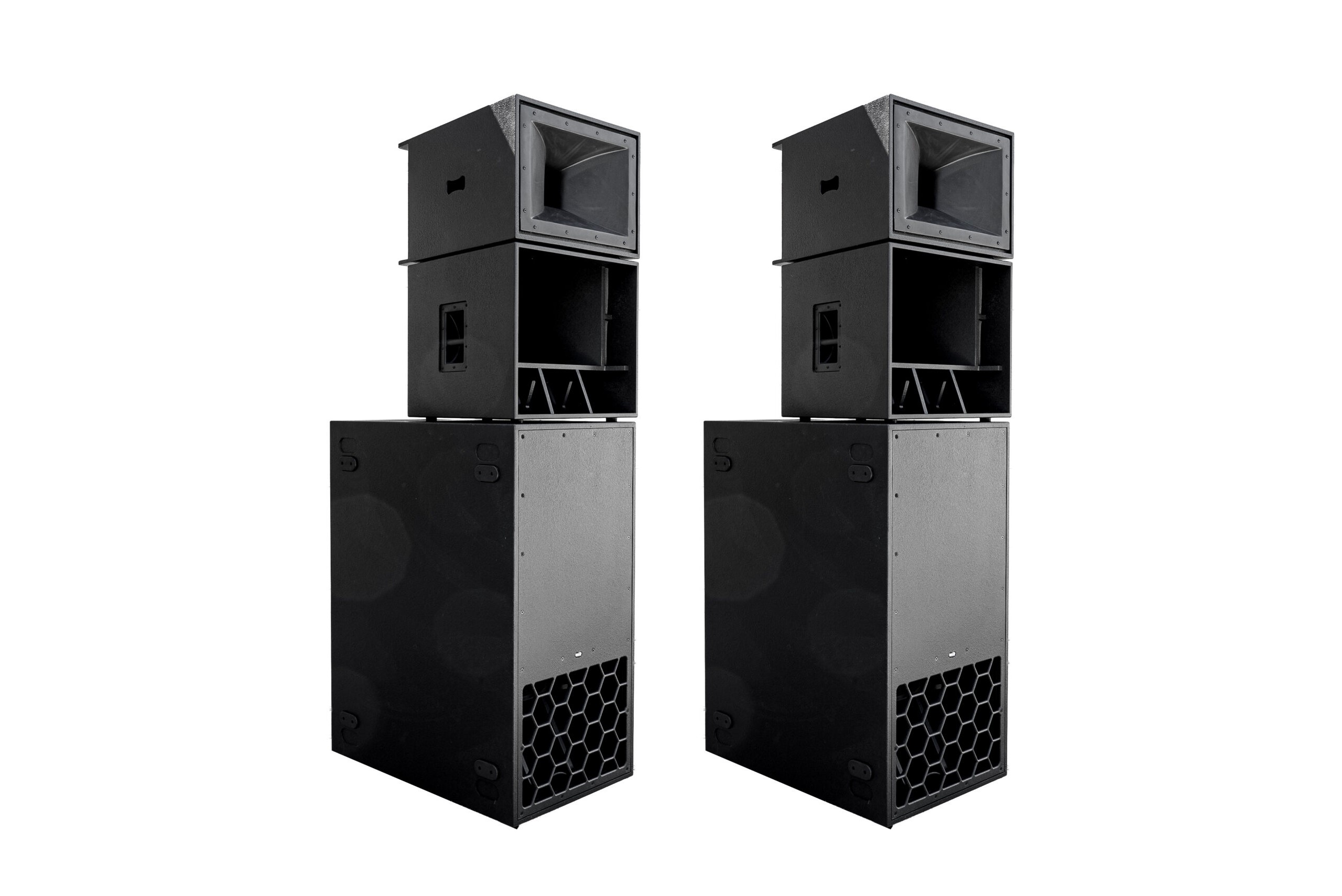
Powered speakers are easy. Plug them in, turn them up, done. But if you’re putting together a PA you plan to use for years, an active system is the better investment.
By active we mean passive cabinets run off rack amps with built-in DSP, where each part of the speaker (subs, woofers, horns) gets its own amp channel. Powered speakers have the amp and processing built into the box.
At a glance
The big difference is where the amp lives. Almost everything else follows from that.
| Active system (passive cabs + DSP amp rack) | Powered speakers (amp in the box) | |
|---|---|---|
| Where the amp lives | In a rack, away from the drivers | Inside each cabinet, behind the woofer |
| If an amp fails | Swap the amp, every cabinet keeps working | That speaker is out until it’s repaired |
| Tuning | Full DSP: crossovers, EQ, delay, limiters per driver | Factory presets, little or no access |
| Drivers and cabinets | Any design, including horn-loaded PARAFLEX and premium B&C or Beyma drivers | Whatever the brand built |
| Growing the system | Add subs or tops and re-route the rack | Buy more boxes of the same line |
| Cabling at each box | One speaker cable (NL4) | AC power and an audio signal cable |
| Lifespan | Cabinets last decades, amps get upgraded separately | Whole box ages out with its electronics |
| Setup | More pieces and a little know-how | Plug in and play |
Why active is worth it
The amps don’t ride inside the speaker
In a powered speaker, the amp is bolted to the back of the cabinet, a few inches from a woofer that’s shaking the whole box. Add heat, humidity and the odd wet load-out and it’s easy to see why those amps fail. In an active rig the amps live in a rack, out of the weather and away from the vibration.

An amp failure isn’t a speaker failure
If a powered speaker’s amp quits mid-gig, that speaker is done until it comes back from repair. With a rack, you swap the amp and keep going. One spare amp can back up the whole system.
You actually get to tune it
A DSP amp gives you crossovers, EQ, delay and limiters for every driver. You can dial the system in for a room and save it as a preset. Most powered speakers give you a couple of factory modes and a volume knob.
Better boxes, better drivers
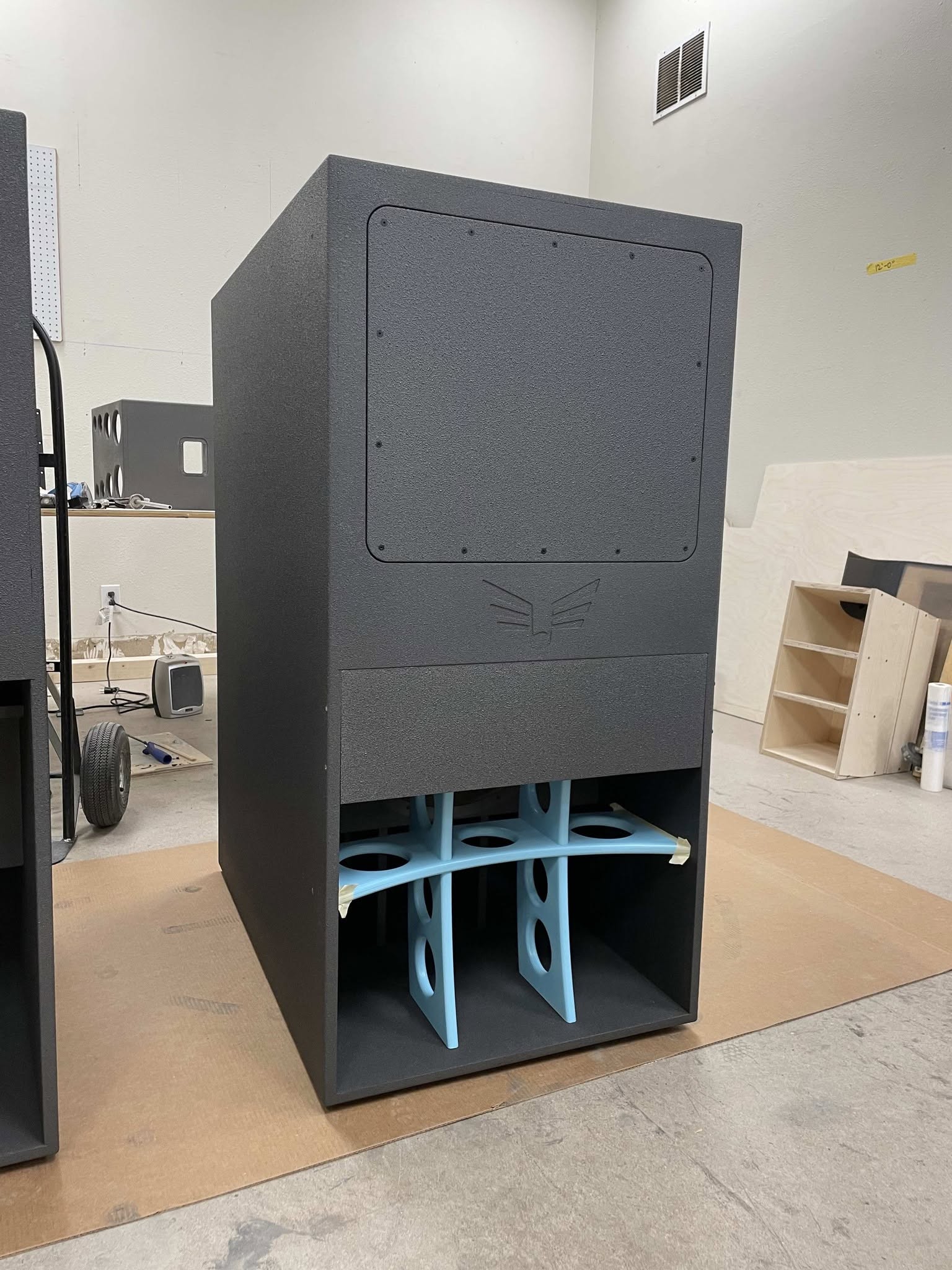
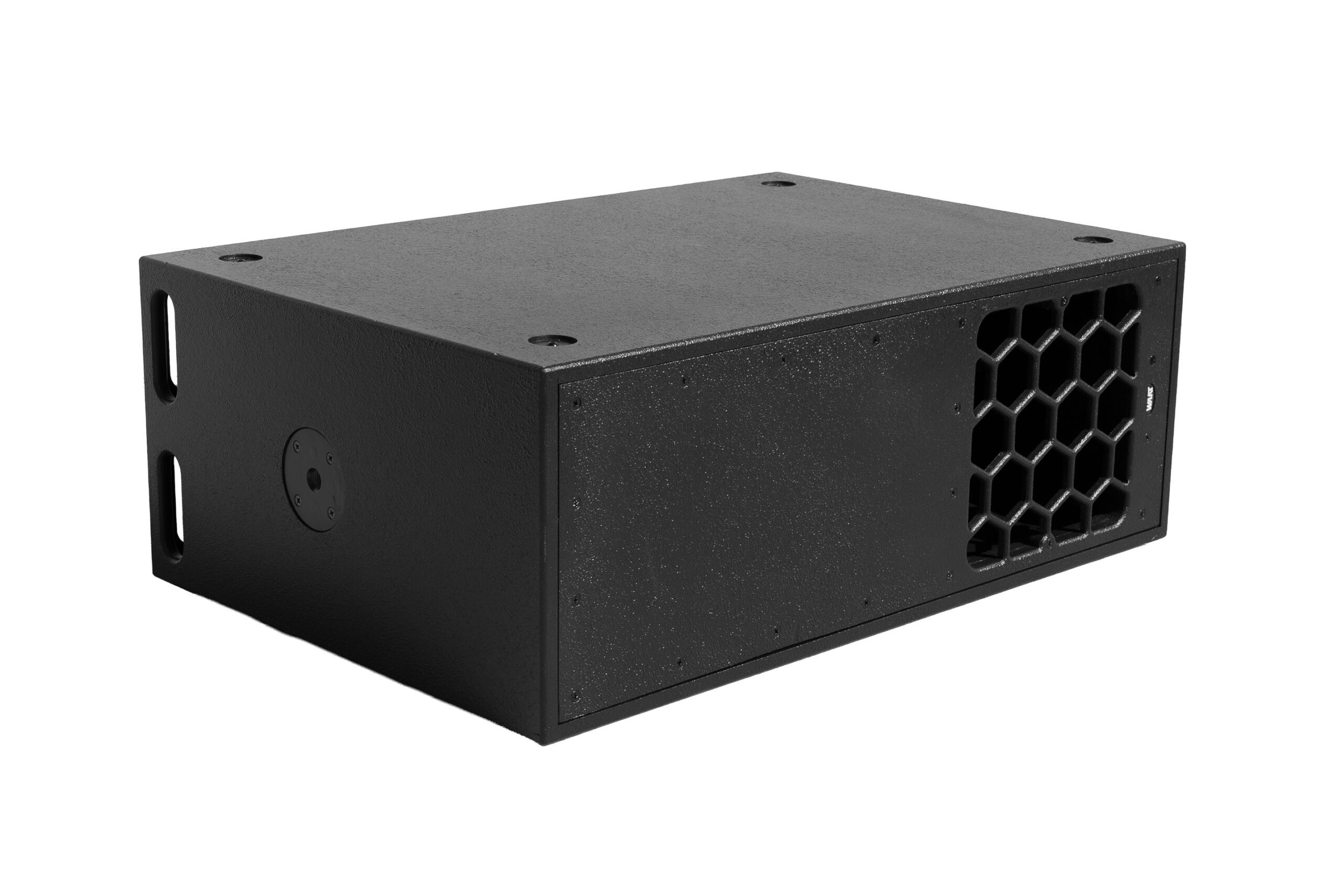
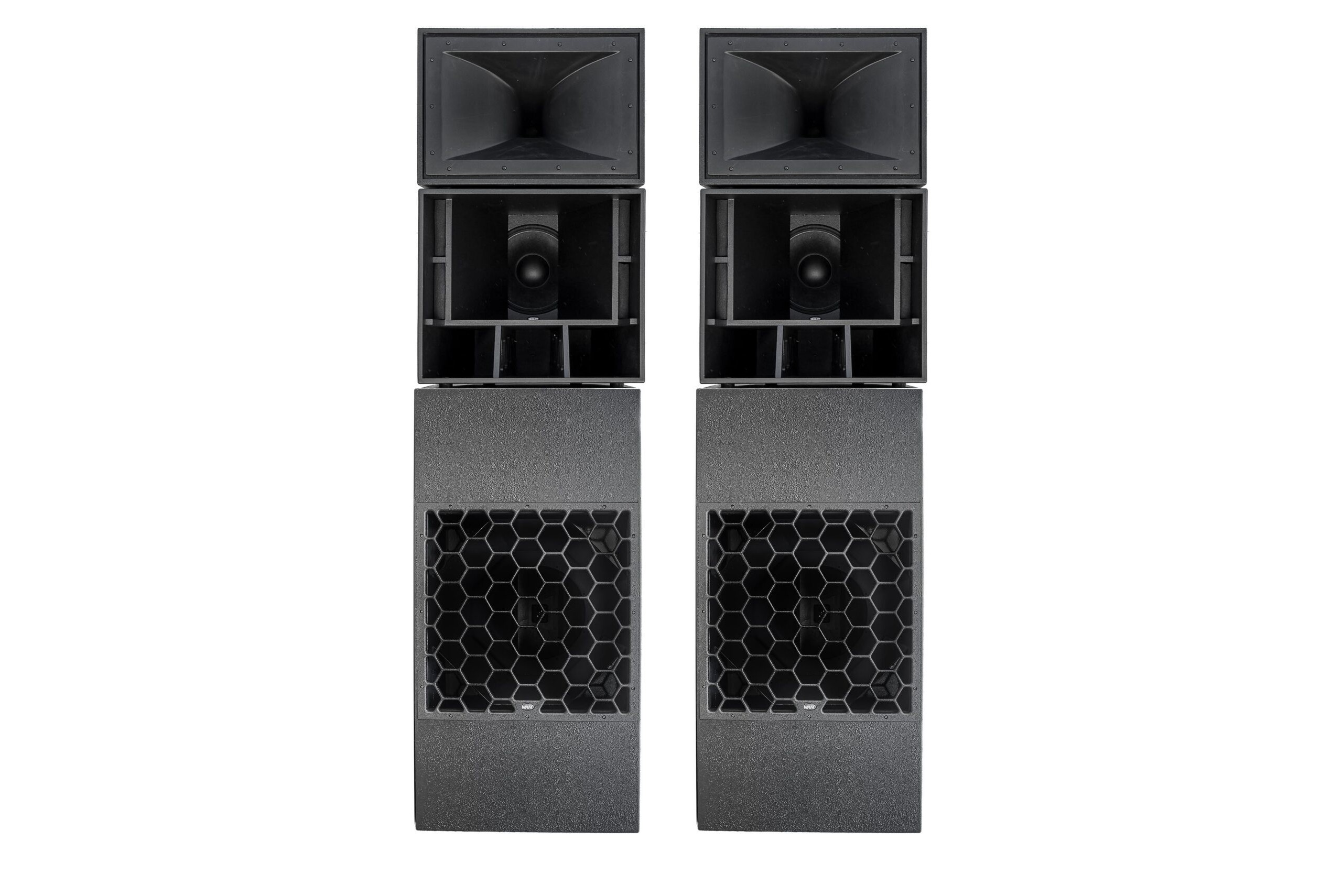
Powered speakers are designed around fitting an amp module inside. Passive cabinets don’t have that limit. That’s why horn-loaded designs like the HOQS PARAFLEX subs and the SAWMOD tops are built this way, with drivers from brands like B&C and Beyma. No amp inside also means a lighter cabinet to carry.
Easy to grow
Want more low end for a bigger room? Add a pair of subs and run them off spare amp channels. With powered speakers you’re usually buying more boxes from the same line.
Cheaper in the long run
A good cabinet can last decades, and amps can be upgraded or replaced on their own. A powered speaker is one unit. When the electronics die or the model gets discontinued, the whole thing is on its way out.
Less to run to each speaker
Each active cabinet needs one speaker cable. A powered speaker needs power and a signal cable at every box, which means more cable runs and more outlets near the stage.

When powered still makes sense
If you do the occasional small gig, like a toast, a coffee shop set or a spare monitor, a powered speaker on a stand is hard to beat for convenience. But if you run events every week or you’re building a system to keep, the rack is worth it.
How WAAT makes active easy
The main complaint about active systems is setup and tuning, so we handle that part. Our turnkey systems come with the cabinets, a matched DSP amp rack and the cables, with presets already dialed in for each cabinet. Set it up, load the preset and play.
See our turnkey PA systems or get in touch and we’ll help you put the right system together.