Long gigs at “party-plus” levels are a stress test for subwoofers. Heat builds in the motor, DC resistance rises, sensitivity falls, and before long you’re fighting thermal compression—or worse, burnt coils. This guide distills practical strategies to keep your subs cool, punchy, and alive through hours of bass-heavy sets.
The Core Truth: Headroom Balance
The #1 lever is enough subwoofers to match your tops for the music you play, at the levels and durations you demand. If your tops have miles of headroom but your subs are running near average limits, heat wins.
Low crest-factor, bass-heavy music (think droning fundamentals, sine-like lines) punishes sub systems. A 10 dB difference between lows and ~90 Hz content implies ~10× more power required in the sub band to keep up. That’s your baseline planning factor for high-SPL, long-duration dance music.
Know Your Worst-Case
The worst case is when the program’s main bass energy sits near your cabinet’s electrical impedance minimum and near excursion minimums—often around the box tuning. That combo pulls current, generates heat, and doesn’t gift you much displacement relief.
Practical takeaway:
If your content drones around 35 Hz, don’t tune the box right at 35 Hz. Tune a bit lower so you aren’t camping on the impedance trough for hours.
Enclosure Choices & Access to Reality
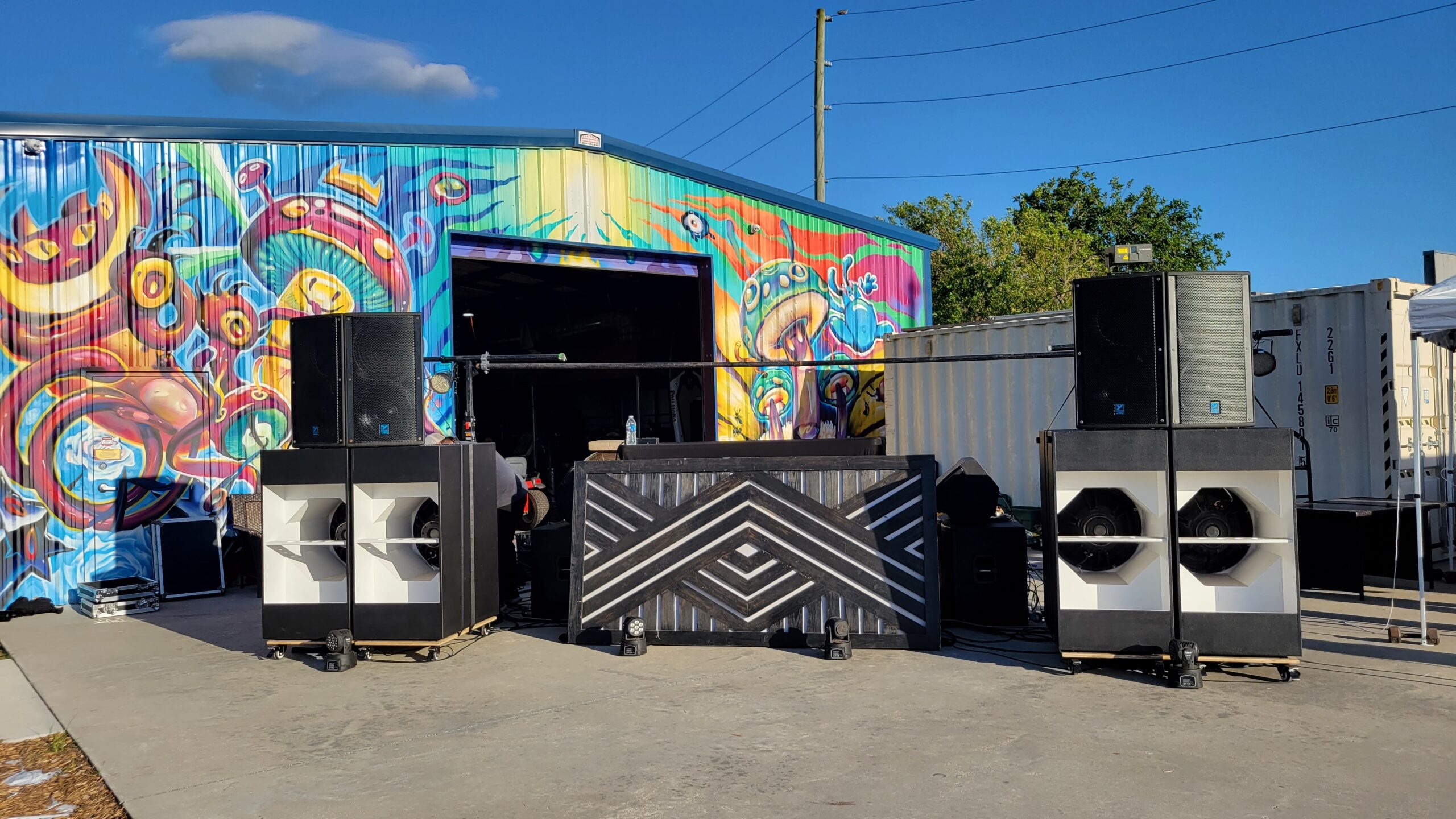
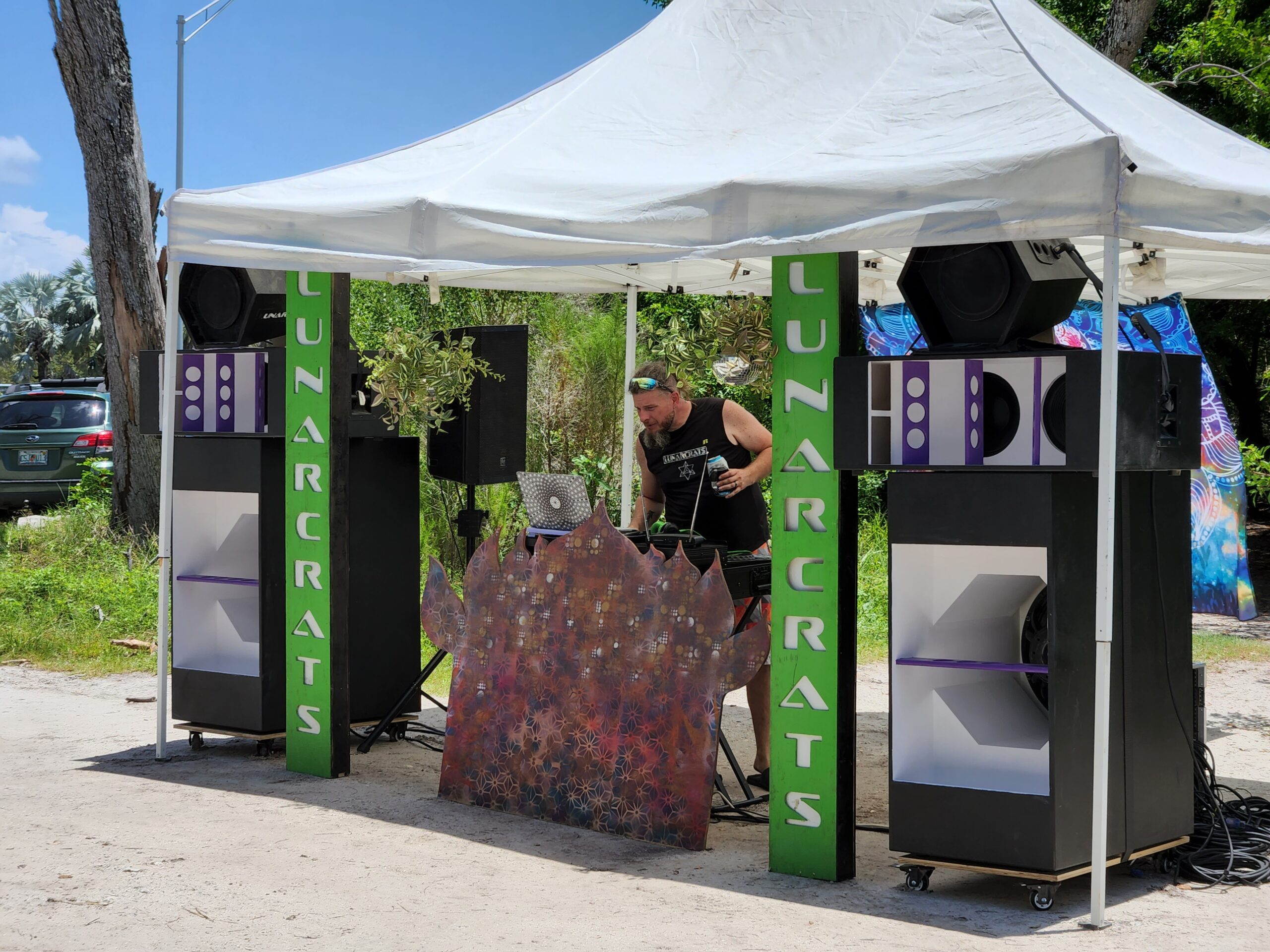
Cabinets like Paraflex and many tapped horns expose the motor, so you can actually touch or IR-scan it during testing. Folded horns and scoops hide the truth—easy to be unaware of rising motor temps.
Measure, don’t guess: bring an IR thermometer to rehearsal/gig-sim tests and log motor temps every 15–30 minutes.
Practical Top:Sub Ratios (Rule-of-Thumb)
These are guides, not gospel—driver selection and music program matter.
- Single Paraflex 1×12 Top (G#1 style)
- ~1:3 with Paraflex 1×18 subs
- ~1:2 with Paraflex 1×21 or 2×15 subs
- Paraflex 2×12 Top
- Double the above sub counts.
- Equivalences (rough):
- 2 × Type “A” 1×12 subs ≈ 1 × 1×18
- 3 × Type “A” 1×12 subs ≈ 1 × 1×21 or 1 × 2×15
- 2 × 1×15 subs ≈ 1 × 1×21
- Paraflex 2×8 Top ≈ 1×12 Top (higher HPF or with kick support increases headroom)
Bending the ratios: Use drivers with larger voice coils / better cooling or multi-driver designs (e.g., C-2E 2×15 with robust 15s, or 21” with 6” coils). More thermal mass + more surface area = slower heat rise.
Processing: Less Is More (for Subs)
Outside of HPF/LPF and polarity/time alignment, keep sub processing minimal. “Exciters,” heavy enhancers, and broad low-shelf boosts near tuning tend to raise average power, accelerating heat. Save corrective EQ for real problems, not permanent loudness.
Zero-Tolerance for Clipping
Clipping anywhere in the chain spews high-frequency energy and jacks average power. Keep meters out of the red; if you need more level, add gain downstream, not upstream. And yes, have the uncomfortable chat with the DJ if necessary.
Limiters That Protect Without Killing Groove
A simple two-stage approach:
1) Peak Stop (Brickwall)
- Goal: Prevent amplifier clipping and protect against mechanical over-excursion.
- Threshold: Aim near driver Program/Musical Program rating (≈ AES + 3 dB) or the max unclipped amp voltage, whichever is lower.
- Timing: Very fast attack/release; high ratio (∞:1).
2) RMS (Average Power) Limiter
- Goal: Control average power (and heat) while preserving crest factor.
- Timing: Attack 2000–3000 ms; Release 2–6× attack; Ratio 6:1 to 10:1.
- Threshold: Start “safe,” then creep up:
- Begin at ~25% of AES (AES/4) average power
- If motors stay acceptably cool across hours, try ~33% of AES
- Then ~50% of AES if your testing still shows safe temps
Back down if motor temperatures feel uncomfortably hot.
Why AES/4? AES power tests use pink noise with 6 dB crest factor (4× peak:avg). If you strip the dynamics, the average component sits around ¼ of AES.
Converting Power Targets to Voltage
Use:

- Example into 8 Ω:
- 1700 W → 117 V
- 850 W → ~82 V
- 425 W (half the voltage of 117 V) → 58.5 V
Note: Half the voltage = quarter the power.
Pro tip: Set limiters with the speakers disconnected, an AC voltmeter on the amp output, and a 50–60 Hz tone. Then reconnect and do multi-hour musical tests while monitoring motor temperature.
Tuning & Program Alignment
- Don’t tune the box at the program’s long-duration fundamental. Aim below the droning region to avoid sitting on the impedance minimum during the marathon.
- High-pass with enough margin to protect below-tuning content.
- Keep crossover points honest; dumping too much “mid-bass” load into subs can inflate average power.
Environment & Deployment Matter
- Ambient temperature, airflow, and humidity affect thermal performance. Outdoor stages with good air movement are gentler than cramped, hot rooms.
- Spacing and array coupling shift system efficiency and required drive. Measure, listen, adjust.
Quick Checklist Before the Gig
- Sub count sized for +10 dB real-world low-frequency headroom target
- Box tuning below the long-duration bass fundamentals in your set
- HPF/LPF set, polarity and timing aligned
- Peak limiter at or just below amp clip / driver Program rating
- RMS limiter validated at AES/4, then tested up to AES/2 if temperatures allow
- Chain gain staged; no red lights anywhere
- IR thermometer packed; log motor temps every 15–30 minutes in rehearsal
- DJ briefed on meter discipline and headroom reality
Closing Thought
Thermal management isn’t magic—it’s about honest headroom, smart tuning, clean gain staging, and limiters that manage average power without crushing dynamics. Do the boring prep work, and your subs will keep their swagger for the whole night.
Further Learning
Community knowledge and tutorials (Powersoft, Linea Research, B&C, and more) are collected here:
BASSAZ Learning Content